
Enough
Setting Out
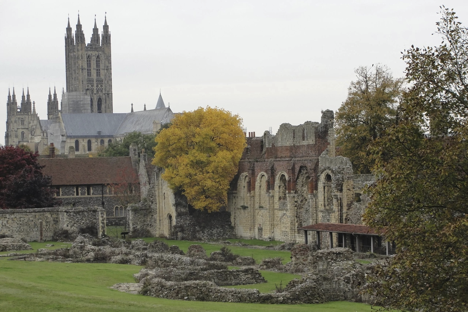
Photo: St. Augustine’s Abbey, Canterbury
West is where we all plan to go some day. It is where you go when the land gives out and the old-field pines encroach. It is where you go when you get the letter saying: Flee, all is discovered. It is where you go when you are told that you are a bubble on the tide of empire. It is where you go to grow up with the country. It is where you go to spend your old age. Or it is just where you go.
This is how Jack Burden, the corrupted idealist in Robert Penn Warren’s All the Kings Men, described his predicament as he drove to California in an existential fever-dream with his life imploding around him. These lines were constantly on my mind last summer as I made my own journey West under much happier circumstances.
Setting out on a journey into an unknown future is complicated. There are things we hope to find up ahead, and things we hope to leave behind, and things we’re just not sure about. This is the tricky problem when we hear stories of call - and stories of sending like last Sunday’s Gospel from Matthew 9. We would like them to follow what we in modern society think of as the default path of time: an upward trajectory of success, the moving staircase of progress and human history. It's easy to think of answering God’s call to us in terms of a forward springing into action. And last Sunday’s Gospel might suggest this: “Go proclaim the Good News,” Jesus says, and they do it. “Don’t plan ahead, don’t pack a bag, just go!” It’s a story of a heroic level of faith and trust.
Our paths aren’t quite so straightforward, and indeed we don’t know what was going through the disciples’ heads when they heard Jesus’ words either. We know what they did in the end, but we don’t know if they had second thoughts they kept to themselves. We don’t know if they were wondering where they would find the courage to start.
If Jesus was sending me out on an unknown, perilous journey, I suspect I might have a reaction more like that of St. Augustine of Canterbury, the first Archbishop of Canterbury sent by Pope Gregory I in 595 AD on a mission to Britain. Daunted by the magnitude of the task and the fierce reputation of the Anglo-Saxons, Augustine and his companions turned around in Gaul and tried to return to Rome. The Pope urged them onward with letters of encouragement, and the eventual mission was a success.
Much more often that not, those who dare great things for God would not have dared much of anything without the support of their community, and without the gift of the Holy Spirit. With God’s help, we can step out on our own journeys of witness, knowing that God is with us each step of the way – and knowing that we aren’t alone.
Yours in Christ,
Kara+
Magnificent Humanity

On Monday, the Vatican released Pope Leo XIV’s first encyclical, Magnifica Humanitas (Magnificent Humanity: On Safeguarding the Person in the Time of Artificial Intelligence). To be sure, we are Anglicans and not Roman Catholics, and we don’t have the same relationship to the Pope as our Catholic siblings do. But this letter is addressed to Christians throughout the world, and indeed to all people of good will. It’s worth engaging with in that spirit. The debut of this document has been an important event for me personally, as I sit on the House of Bishops theology committee on artificial intelligence. I encourage everyone to take a look at it, or at least at some articles about it. (It’s 180 pages long!) Here’s the (very compelling) video “trailer” for the encyclical. Here’s the Vatican panel discussion featuring a number of prominent scholars, which I woke up at 5:30 AM on Monday to watch live. Here’s a short summary. And here’s the whole thing.
One of the overarching images Leo uses is the contrast between the Tower of Babel and the rebuilding of Jerusalem in Nehemiah. The Tower of Babel, he writes, “was a project conceived without reference to God, supported by a uniformity that eliminated diversity and that chose homogenization over communion. When a city is built on pride and the claim to self-sufficiency, communication breaks down, languages are confused and people no longer understand each other.” The rebuilding of Jerusalem proceeds from a different basis, “not through the initiative of one man, but through the shared responsibility of all: men, women, priests, artisans, heads of households and young people all play a part. It is an undertaking with God at the center, which rebuilds relationships before rebuilding with stones.” The challenge that AI presents to us is the challenge of remaining resolutely human in a world that chafes at limits, that devalues the mutuality of relationship, that prizes efficiency above anything else.
There is much that we can do, each in our own lives, day by day:
The twentieth-century Catholic author J.R.R. Tolkien, in the words of a protagonist in one of his novels, described our responsibility in this way: “It is not our part to master all the tides of the world, but to do what is in us for the succour of those years wherein we are set, uprooting the evil in the fields that we know, so that those who live after may have clean earth to till.” The civilization of love will not arise from a single or spectacular gesture, but from the sum total of small and steadfast acts of fidelity that serve as a bulwark against dehumanization. For this reason, it is worthwhile pausing to reflect on some aspects of how we, each in our own way, can cooperate in building the civilization of love. (Magnifica Humanitas 213)
May we all play our part in building that civilization of love in all we do, here at Trinity Church and in our community of Princeton.
In Christ,
Kara+
You Will Be My Witnesses
Dear friends,
This Sunday, we’re in that strange place between the Ascension, which happens this Thursday, and Pentecost, which will be on the 24th. But this Sunday’s lectionary looks towards Pentecost even as it tells the Ascension story. In Acts 1, Jesus says “you will receive power when the Holy Spirit has come upon you; and you will be my witnesses in Jerusalem, in all Judea and Samaria, and to the ends of the earth.” To be a witness to Jesus, empowered by the Holy Spirit, is to be sent out to share the Good News everywhere we go.
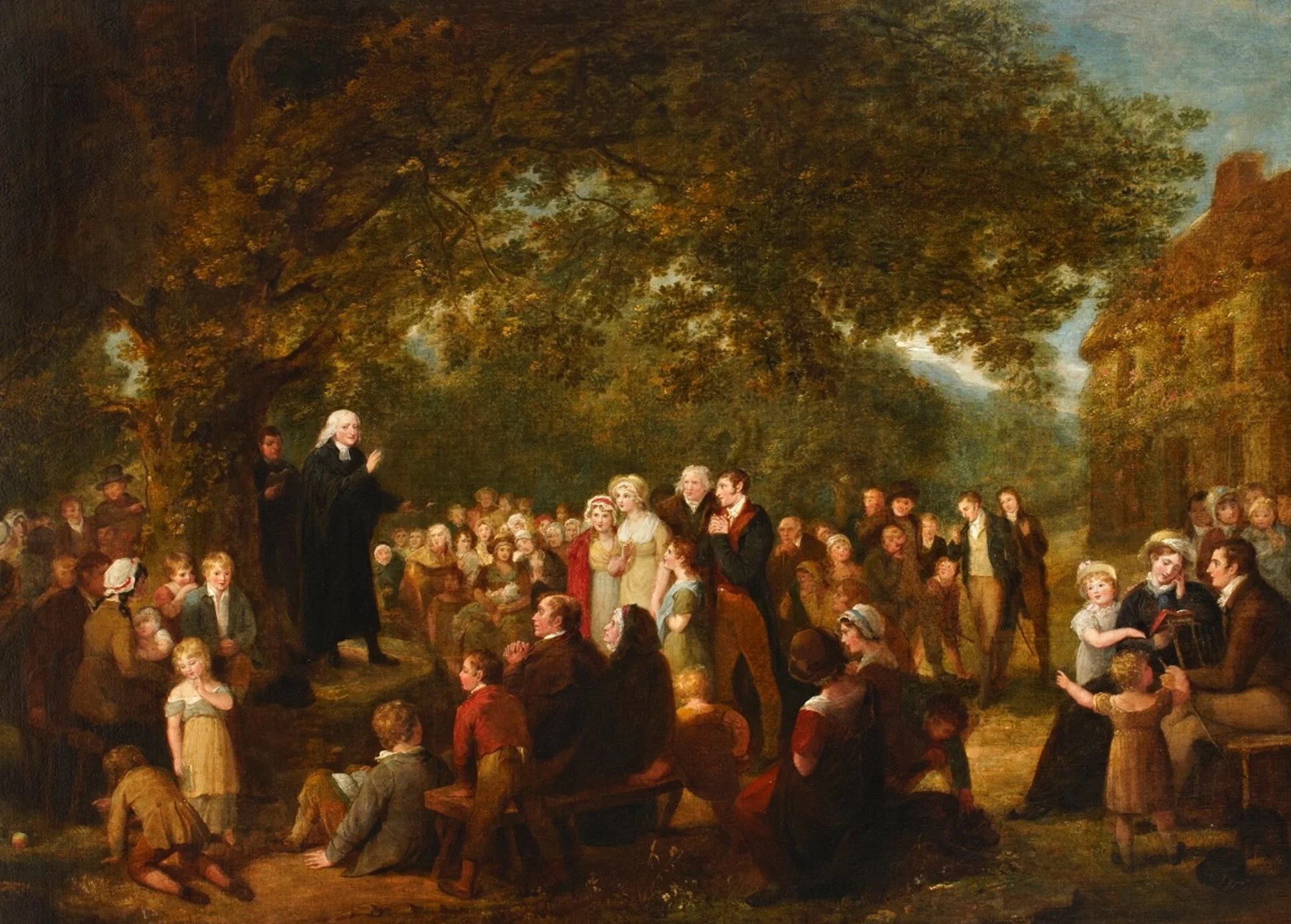
Having attended a Methodist seminary, I confess that I have a soft spot in my heart for John Wesley. In a time when the predominant strain of Anglicanism was heady and philosophical, Wesley called the church to be attentive to the real, powerful work of the Holy Spirit today, not just in history. He shared the love of Christ in the highways and byways of his time and place - in fields and in mining towns as well as in city churches. Today, Wesley still reminds Anglicans, and indeed all Christians, that the Holy Spirit is alive and active, changing hearts and transforming minds.
Edgardo Colon-Emeric, Duke’s current Dean of the Divinity School, writes,
When John Wesley first stepped out of the walls of the church in order to reach people working in fields, mines and markets, he preached from the passage from Jesus’ inaugural sermon: “The Spirit of the Lord is upon me, because he has anointed me to bring good news to the poor” (Luke 4:18). This textual choice was not free from controversy. The 18th century dismissed those who talked about the ongoing work of the Spirit as ignorant and irresponsible.
Against the theological currents of his day, John Wesley refused to limit the Spirit’s presence and power to the age of the apostles or the institutions of the church. The rise of Methodism was for him proof that the power of Pentecost was still at work in the world. The Spirit was still active in history, particularly among the marginalized.
According to Scripture, the love of God is poured into our hearts through the Holy Spirit (cf. Romans 5:5). For Wesley, the social dimension of this love is made visible through works of mercy. Pentecost’s power is at work when we feed the hungry, visit the sick and welcome the stranger. It is also at work when we call sinners to repentance and encourage Christians in the way to holiness.
As we walk the road to Pentecost in the coming week, I invite you to pray with me that perilously life-giving prayer: Come, Holy Spirit. I pray that the Holy Spirit will continue to enliven and empower our parish for ministry, and set us on fire with love for the God who has given us this Good News to proclaim.
Yours in Christ,
Kara+
The God of Surprises (A Sermon Spoiler)
One of my favorite stained glass windows at Duke University Chapel shows the disciples on the road to Emmaus. The disciples are walking down the road, and Jesus is walking up behind them, looking like he’s about to tap one of them on the shoulder: boo! Jesus’ appearance to his friends comes as a surprise-a welcome surprise, a world changing surprise, but a surprise nonetheless.
In our Gospel for Sunday, the disciples find out that the resurrection isn’t just a rumor – it’s real. And they discover that it’s real in a tangible way as Jesus breaks bread with them. In Jesus, God shows himself to us as not just able to be seen, but able to be touched. And God chooses to be known that way. God gains nothing by being seen or touched. God would be God regardless of how we experience God. But God chooses to be with us, to share Scripture and bread with us, to be perceived. The fact that God chooses to be there on the road with us, that God breaks bread with us, shows us that this is a God who can be trusted in the absence of perception as well as in its presence. God chooses to be in that kind of intimate relationship with us, and that tells us how much God loves us, how safe we are in God’s hands. God chooses to invite us into a relationship of new life - a new life of peace. This is the new life that Jesus invites us to share in, through baptism and every time we share the Eucharist with each other. Our faith isn’t ethereal and theoretical, it’s something that we touch and that touches us.
Join us this Sunday to be surprised once more by grace, and to find out how this story ends!
Yours in Christ, and in Christ alone,
Kara+
God’s Chosen Family

Dear friends,
Greetings from Holy Cross Monastery in West Park, NY, where a group of Trinity folks are enjoying a time of prayer, discussion, and renewal before Holy Week and Easter. While we have primarily been discussing the Gospels for Holy Week, our conversation has also included the lessons and sermons we have heard in worship with the brothers. Today we observed the Feast of St. Joseph, one of two major feasts that falls during Lent – the other is the Annunciation on March 25. Today’s sermon began with a mention of the Thanksgiving for the Birth or Adoption of a Child in the Book of Common Prayer, a short liturgy to give thanks for a newborn baby or to give thanks for the adoption of a child at any age. In the case of adoption, the priest presents the child to his or her parents, saying, “As God has made us his children by adoption and grace, may you receive N. as your own son (daughter).” The service then continues with the Magnificat, the Song of Mary.
In Jesus Christ, God configures our relationships in ways that transcend biological heredity. St. Joseph is, of course, a model of this kind of relationship, acting as an adoptive earthly father for Jesus. But each one of us is adopted as a child of God through Jesus Christ our brother. God doesn’t stand at a spiritual or physical distance from us. Rather, he takes on our humanity and names each one of us as beloved children. In doing so, he also gives us to each other as chosen family – chosen by God from before the foundation of the world. As we prepare to walk the way of the cross, there is no better time to contemplate the Church as a family in Christ, a family constituted even from the Cross itself. In St. John’s passion narrative, we read:
‘Meanwhile, standing near the cross of Jesus were his mother, and his mother's sister, Mary the wife of Clopas, and Mary Magdalene. When Jesus saw his mother and the disciple whom he loved standing beside her, he said to his mother, "Woman, here is your son." Then he said to the disciple, "Here is your mother." And from that hour the disciple took her into his own home.’
We often think of Pentecost as the birthday of the Church, but here on Good Friday, at the very foot of the Cross, Jesus knits his followers together. May we walk these days of Holy Week knowing that we are so much more than a loose affiliation of church members, we are family to each other in a very real sense.
Yours faithfully in Christ,
Kara+
PS On March 25, the Feast of the Annunciation, Archbishop Sarah Mullally will be enthroned at Canterbury Cathedral. While the service won’t be available live due to BBC restrictions, you can watch it here after the broadcast.
Baptism of our Lord
I have set before you life and death, blessings and curses. Choose life so that you and your descendants may live. – Deuteronomy 30:19
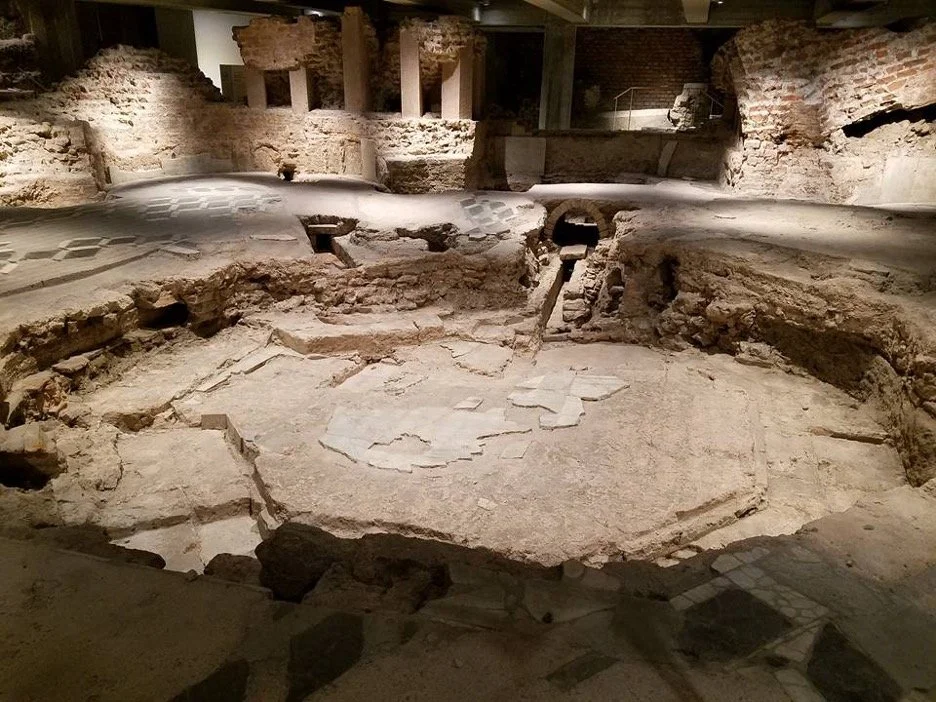
In the calendar of the Church year, we have just celebrated the feast of the Epiphany. This Sunday, we will commemorate the Baptism of our Lord. At Epiphany, Jesus is revealed as the Son of God to the Gentiles. The question of Epiphany is: Who is this one who is shown to the gentiles, and to all the world? He is none other than the Son of God. The question of the first Sunday after the Epiphany is: What is this baptism in which we’re united to the Son of God, and to each other?
Baptism is about our inclusion in the household of God, to be sure. It is about God accepting us, and about our accepting Christ as our Lord and Savior. But there are also things to be rejected: the powers of death, the forces that draw us from the love of God, all those things that corrupt the creatures of God. In baptism, we say “no” to death and “yes” to life, as we pass by God’s grace through death to life in Jesus’ cross and resurrection. This “no” and “yes” is the ground of our Christian lives.
The 20th century Episcopal lay theologian William Stringfellow wrote that “the vocation of the baptized person is a simple thing: it is to live from day to day, whatever the day brings, in this extraordinary unity, in this reconciliation with all people and all things, in this knowledge that death has no more power, in this truth of the resurrection. It does not really matter exactly what a Christian does from day to day. What matters is that whatever one does is done in honor of one’s own life, given to one by God and restored to one in Christ, and in honor of the life into which all humans and all things are called. The only thing that really matters to live in Christ instead of death.” In Jesus Christ, God has said “yes” to us, unequivocally. God calls each one of us to say “yes” to life, to live in Christ, and to walk in love.
Yours in Christ,
Kara+