
Blessed Holy Week
Dear Beloved of Trinity Church,
This Sunday, we begin our Holy Week journey.
We lift our palm branches high, waving and crying out,
“Blessed is he who comes in the name of the Lord!
Hosanna in the highest.”
For a brief moment, we try to place ourselves among the crowd some two thousand years ago—
spirits lifted, hearts full of hope and expectation.
At last, things are turning.
At last, things will be made right.
This must be the beginning—
the long-awaited procession into a kingdom of righteousness and justice.
And yet… how quickly things turn.
Hopes are dashed.
Dreams are shattered.
Expectations crumble.
Life, as we know, is unpredictable.
In a moment, everything can change.
The world can turn upside down in an instant—
like shifting sands beneath our feet,
like winds that rise without warning,
like floods that overwhelm both land and soul.
How, then, do we steady ourselves?
It is for such a world and time as this that our Lord came.
Christ entered into the very heart of instability—
standing on shifting sands,
facing the howling winds of rage,
and walking through the floodwaters of fear.
Yet always, he remained rooted in love.
In him, we find our anchor.
In him, we find life and hope.
And so we, too—fully human, deeply vulnerable—
are invited to walk this path.
With faith in God’s goodness,
and trust in the enduring love revealed in Christ,
we find our way forward.
Beloved, I invite you into this most sacred journey—
not away from uncertainty,
but through it.
Through the trials and travails of life,
held always by the certainty and constancy
of God’s unchanging love,
as revealed to us
in the life, death, and resurrection
of our Lord Jesus Christ.
Blessed Holy Week,
Paul+
Seeing with Fresh Eyes
Dear Beloved of Trinity Church,
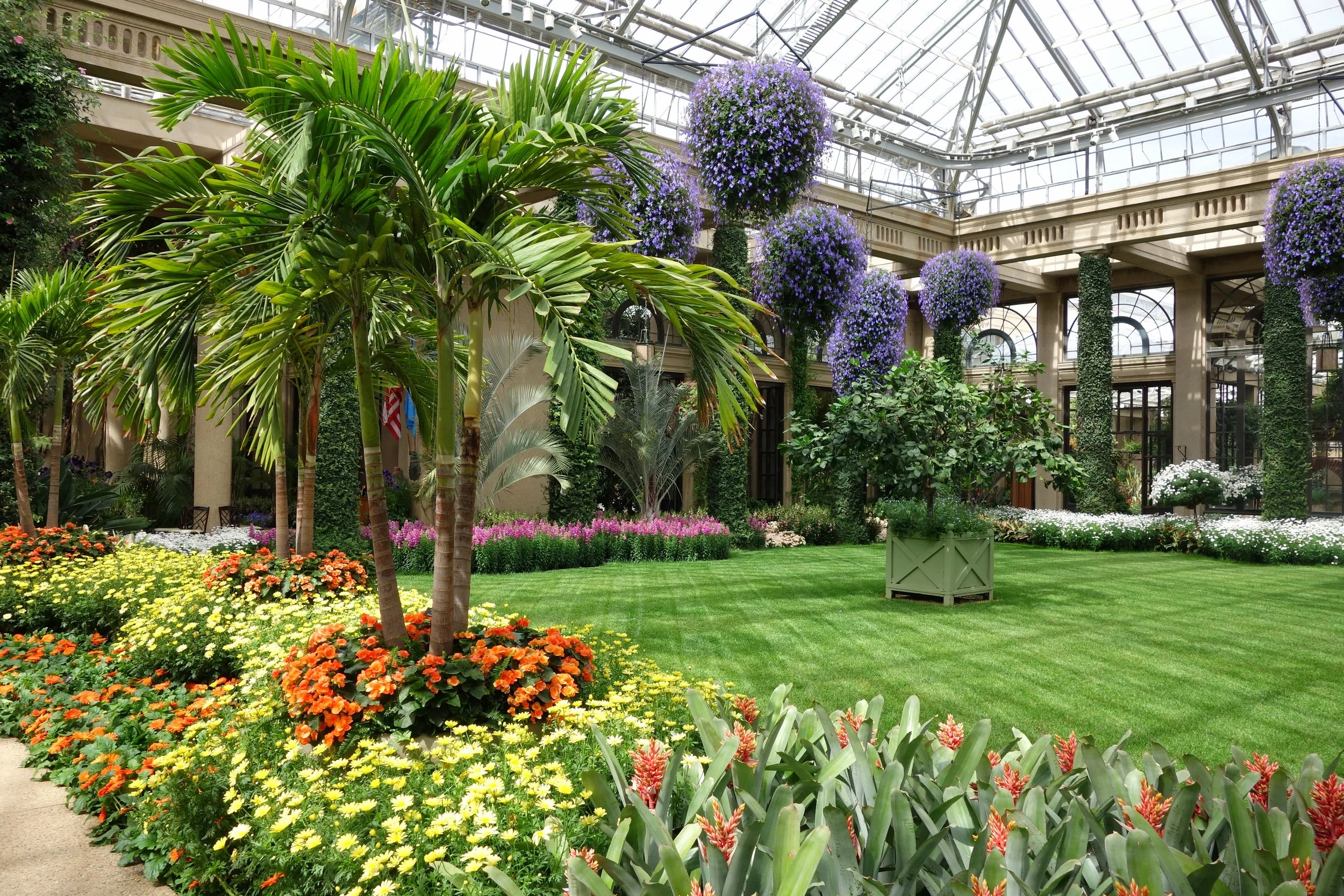
Some weeks ago, I shared that a friend took me to Longwood Gardens for my birthday. It was a cold January day, but within the warmth and beauty of the arboretum, we discovered such color and life. It was an oasis in the middle of the barren landscape of winter.
When I stepped into the first conservatory, my glasses immediately fogged from the dramatic change in temperature and climate. After taking them off and letting my eyes adjust, I simply stood there—eyes wide—slowly turning in place, trying to take it all in. Everywhere I looked there was beauty: vibrant flowers, towering palms, rich greens, and bright colors alive in the middle of winter.
My friend stood nearby with a huge smile on his face and began to laugh.
“I love bringing people here and watching their reaction,” he said. “Because there’s nothing like seeing it for the very first time.”
And he’s right.
There is something sacred about experiencing things for the first time. The first time we taste something delicious, smell the fragrance of a flower, hear a beautiful piece of music, or witness a breathtaking landscape—we are filled with awe, wonder, excitement, and life. But over time, familiarity quietly dulls our awareness. What once filled us with amazement becomes ordinary. What once made us pause becomes something we pass by without noticing.
What a loss.
The French writer Marcel Proust once wrote,
“The real voyage of discovery consists not in seeking new landscapes, but in having new eyes.”
And G. K. Chesterton reminds us,
“The world will never starve for want of wonders, but only for want of wonder.”
In this season, I invite us to awaken our souls again to the gifts of God and life that surround us—to see again, as if for the very first time, the sunrise in the morning sky, the faces of those we love, the taste of our favorite food, the sound of a song that stirs our hearts.
To see again, with fresh eyes, the gift of God’s love alive in the world—so that our hearts may be stirred, our souls nourished, and our spirits enlivened.
Lenten Blessings,
Paul+
Pathway of Love
Dear Ones of Trinity Church,
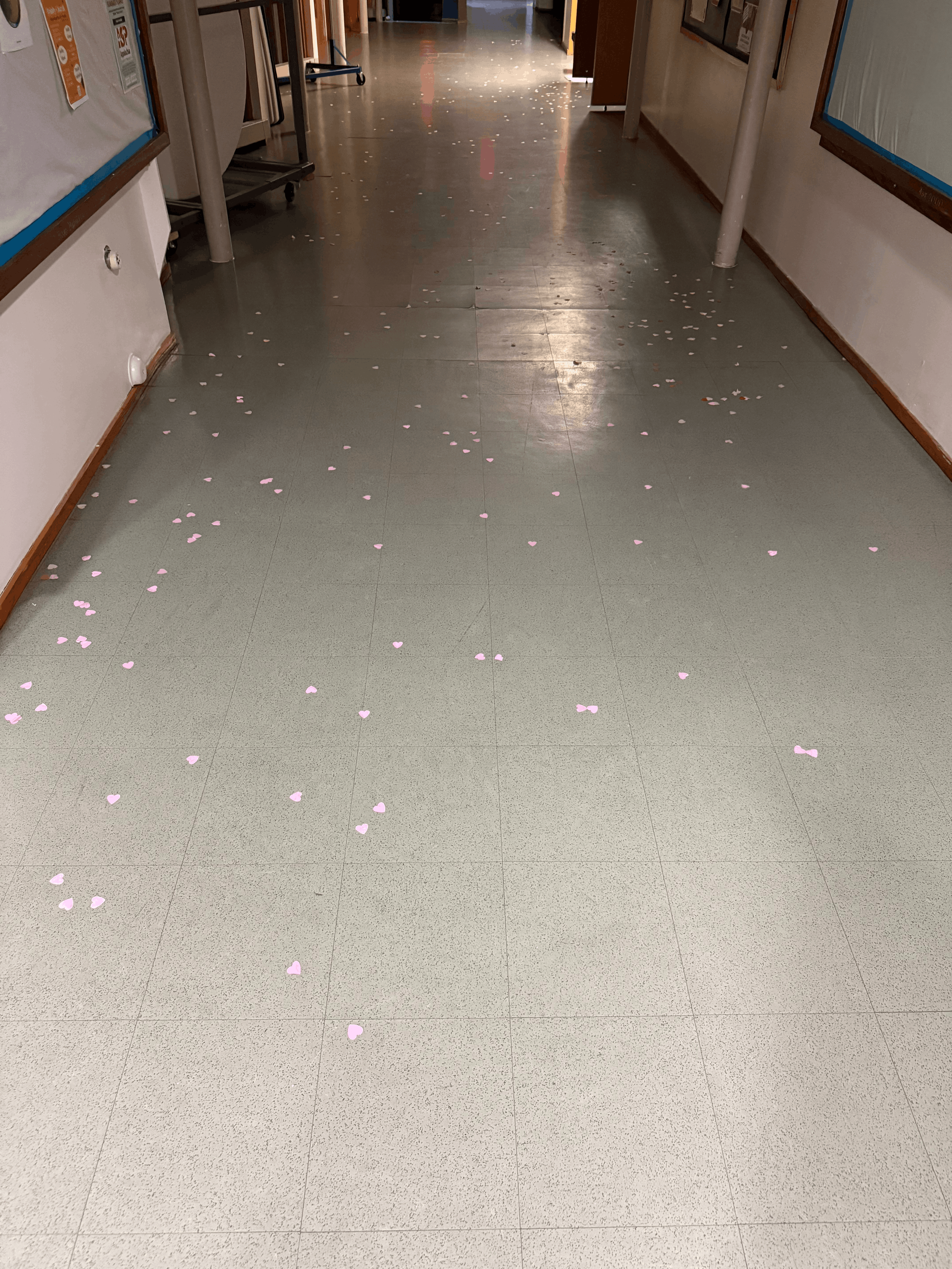
This evening, as I made my way from my office to the rectory, I took my usual path down by the Parish Hall and out the back door. But tonight, there was a wonderful surprise waiting for me along the way.
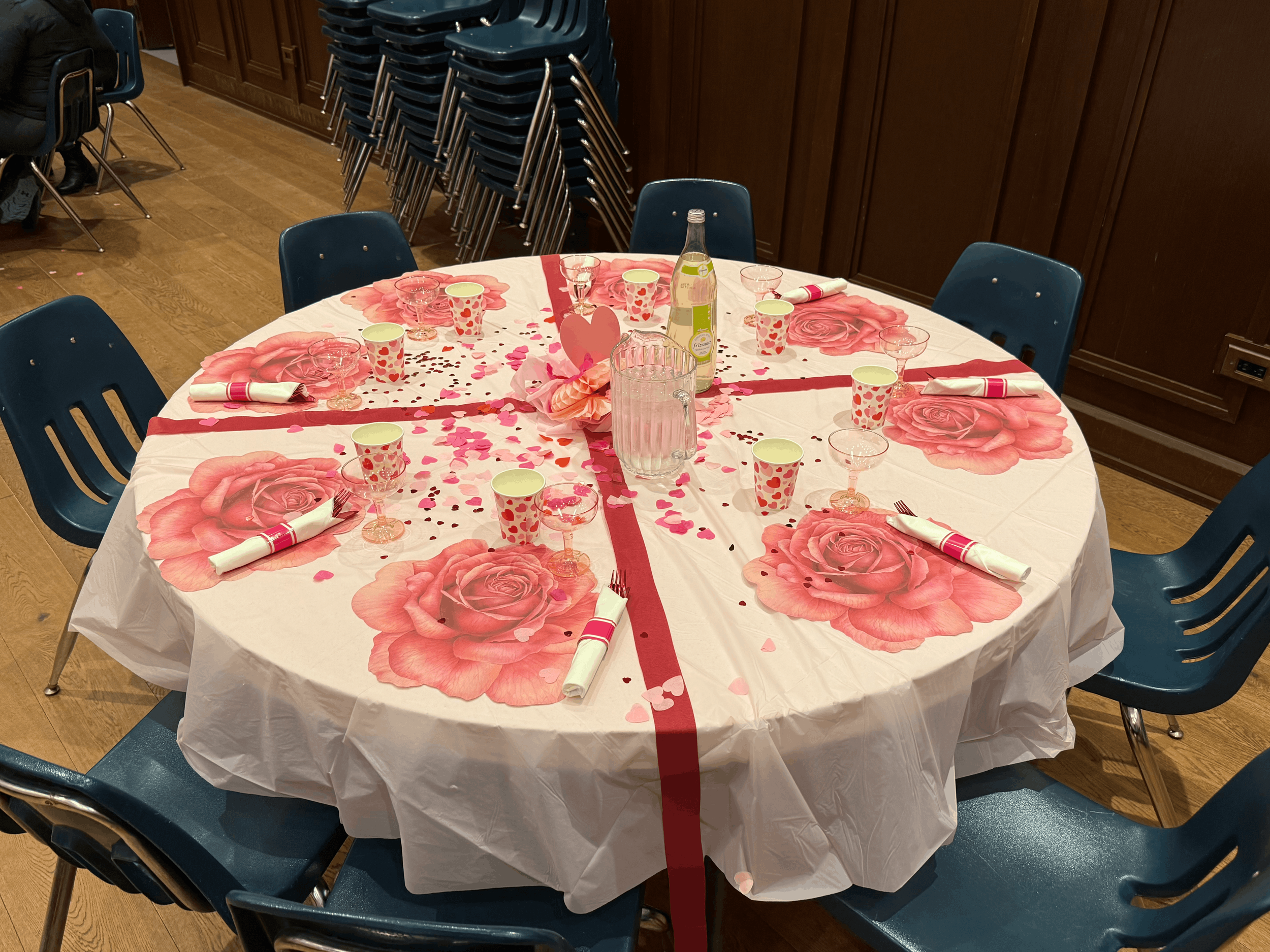
The hallway outside the Parish Hall was covered in little confetti hearts. It was our usual Thursday evening choir supper, but tonight there was a Valentine’s theme — beautifully decorated tables, special sweet treats, and heart-shaped confetti brought the occasion alive.
And as children are prone to do — and as I wish adults would do more often — they found the confetti hearts irresistible. They couldn’t help themselves. The hearts were scooped up and joyfully spread throughout the room and into the hallway.
I did not witness the actual scattering of the hearts. I saw only the evidence of it. And immediately, I smiled. My own heart was warmed as I walked home on a pathway literally covered in hearts.
If only we would do the same with our own hearts — with our lives and our words. If only we would find such joy in spreading the love that already dwells within us. The hope that lives within us.
May we move through these coming days with the joy and freedom of the children, scattering kindness as freely as they scattered confetti hearts. May we spread God’s love generously, lavishly, without calculation - that all of us might walk each day along a pathway covered in love.
Peace and blessings,
Paul+
Spread Your Love Princeton
Dear Good People of Trinity Church,
I would like to extend to you a heartfelt invitation to an evening of creativity, art, community, and love. On February 13th, Trinity Church will host #SpreadYourLove Princeton, a gathering rooted in our shared humanity and our call to love more deeply.
We are honored to welcome local artist Perry Milou, a local artist who has worked for several years with the Spread Your Love initiative, exploring our common humanity and the unifying power of love that created us. His work invites us to consider meaningful ways we can express and embody love in the world, helping to make our shared life more compassionate and whole.
In a time marked by division, discord, distrust, and animosity—when harsh and demeaning words often feel loud and overwhelming—we are called to gather together, grounded in love and grace. This evening is an opportunity to come together as a church community and as a wider community, united in hope and purpose, to help make our world a better place.
Please view the link below for a short video about the evening, and look for more information to come. Most of all, I hope you will join us on February 13th for #SpreadYourLove.
Forward in faith.
Forward together.
Forward in Love
In Christ,
Paul+
The Eyes of Jesus
Dear Beloved of Trinity,
As you may know, each day this month, I have been posting a short video reflection on social media, working my way through John O’Donohue’s book To Bless the Space Between Us.
Today, I offer a brief reflection on O’Donohue’s blessing entitled The Eyes of Jesus.
I imagine the eyes of Jesus were harvest brown,
the light of their gazing suffused with the seasons:
the shadow of winter,
the mind of spring,
the blues of summer,
and the amber of harvest.
The eyes of Jesus gaze on us.¸
This gaze knows the signature of our heartbeat.
It recognizes us before we explain ourselves,
names us before we speak.
Forever falling softly on our faces,
his gaze piles the soul with light.
What we cast our gaze upon, over time, shapes our lives. Our attention is never neutral; it forms our desires, trains our loves, and slowly makes us into a certain kind of person. So we are wise to be gentle and cautious with our looking—with what we linger over, what we scroll past,
what we allow to claim our eyes and our hearts.
And yet, there is a gaze that does not drain us or scatter us.
The gaze of Jesus does not demand or diminish.
It rests upon us with patience and delight.
To meet his eyes is to be seen without fear,
known without being reduced,
loved without condition.
This is the gaze that changes us.
This is the gaze that sustains us.
This is the gaze that quietly reminds us, again and again,
that we are already beloved.
Grace and peace,
Paul+
Beauty
Dear Beloved of Trinity,
Yesterday, a good friend took me on what he called a “field trip.” He sensed that I needed a break—a day set aside for quiet, reflection, and beauty. In other words, a soul-cation.
We drove about an hour and a half to Longwood Gardens in Kennett Square, Pennsylvania. Longwood describes itself as “the living legacy of Pierre S. du Pont, bringing joy and inspiration to everyone through the beauty of nature, conservation, and learning.” In their vision statement, they declare: “We envision a world where beauty is accessible to all.”
The Irish poet and theologian John O’Donohue once wrote, “Beauty isn’t all about just nice loveliness. Beauty is about more rounded, substantial becoming. I think beauty, in that sense, is about an emerging fullness, a greater sense of grace and elegance, a deeper sense of depth, and also a kind of homecoming for the enriched memory of your unfolding life.” O’Donohue insisted that beauty is a human calling.
We are meant to live our lives embraced and animated, challenged and healed, inspired and sustained by beauty. Beauty is all around us, yet so often we fail to recognize it. Our world offers cheap imitations—quick dopamine hits that fire in our brains—and we mistake these fleeting sensations for beauty itself.
God, with great intention, infused all of creation with beauty, knowing it would help to sustain and heal us, revive and inspire us. To remind us of this sacred truth, I share with you the iconic hymn “For the Beauty of the Earth.”
For the beauty of the earth,
for the glory of the skies,
for the love which from our birth
over and around us lies.
Christ, our Lord, to you we raise
this, our hymn of grateful praise.
For the wonder of each hour
of the day and of the night,
hill and vale and tree and flower,
sun and moon and stars of light.
Christ, our Lord, to you we raise
this, our hymn of grateful praise.
For the joy of human love,
brother, sister, parent, child,
friends on earth, and friends above,
for all gentle thoughts and mild.
Christ, our Lord, to you we raise
this, our hymn of grateful praise.
For yourself, best gift divine,
to the world so freely given,
agent of God’s grand design:
peace on earth and joy in heaven.
Christ, our Lord, to you we raise
this, our hymn of grateful praise.
May the beauty of God—and of God’s creation—bless you this day.
Peace and Blessings,
Paul+
Advent: The Beginning of the End of All in Us Not Yet Christ
Inspired by Thomas Merton
Thomas Merton, in his Advent essay Hope or Delusion, writes that Advent is “the beginning of the end of all in us that is not yet Christ.” With that single line, he invites us to step away from any sentimental or Hallmark-style picture of the season. Advent is not a time of nostalgia. It is not a gentle manger scene meant to soothe us. Advent confronts us with the truth of Christ’s birth within the broken, chaotic reality of our lives and our world.
The Incarnation is not sentimentality — it is reality. It is God choosing to enter the world as it is, not as we wish it were. And so, Advent asks us to do the same. It calls us to look honestly at who we are and the difference between our lives and the life of Christ, and at the hopes we carry. Is our hope grounded in the real, living Christ, or is it about an illusion — a kind of spiritual pixie dust we imagine will make everything right without asking anything of us?
Advent, therefore, is not sacred sentimentality or ecclesial escapism. It is a moment of truth — the truth about ourselves, the truth about our world, and the truth about what God is bringing to birth within it. Merton’s insight reminds us that Advent is both invitation and challenge: the call to let the false power of our egos fall away, and to surrender our hearts to the transforming grace of God.
So let us rejoice and give thanks in this season of beginnings —
a season that marks the beginning of the end of all in us not yet Christ,
and the beginning of Christ being born in us anew.
Advent Blessings,
Paul+