
Dear friends,
This Sunday, we’re in that strange place between the Ascension, which happens this Thursday, and Pentecost, which will be on the 24th. But this Sunday’s lectionary looks towards Pentecost even as it tells the Ascension story. In Acts 1, Jesus says “you will receive power when the Holy Spirit has come upon you; and you will be my witnesses in Jerusalem, in all Judea and Samaria, and to the ends of the earth.” To be a witness to Jesus, empowered by the Holy Spirit, is to be sent out to share the Good News everywhere we go.
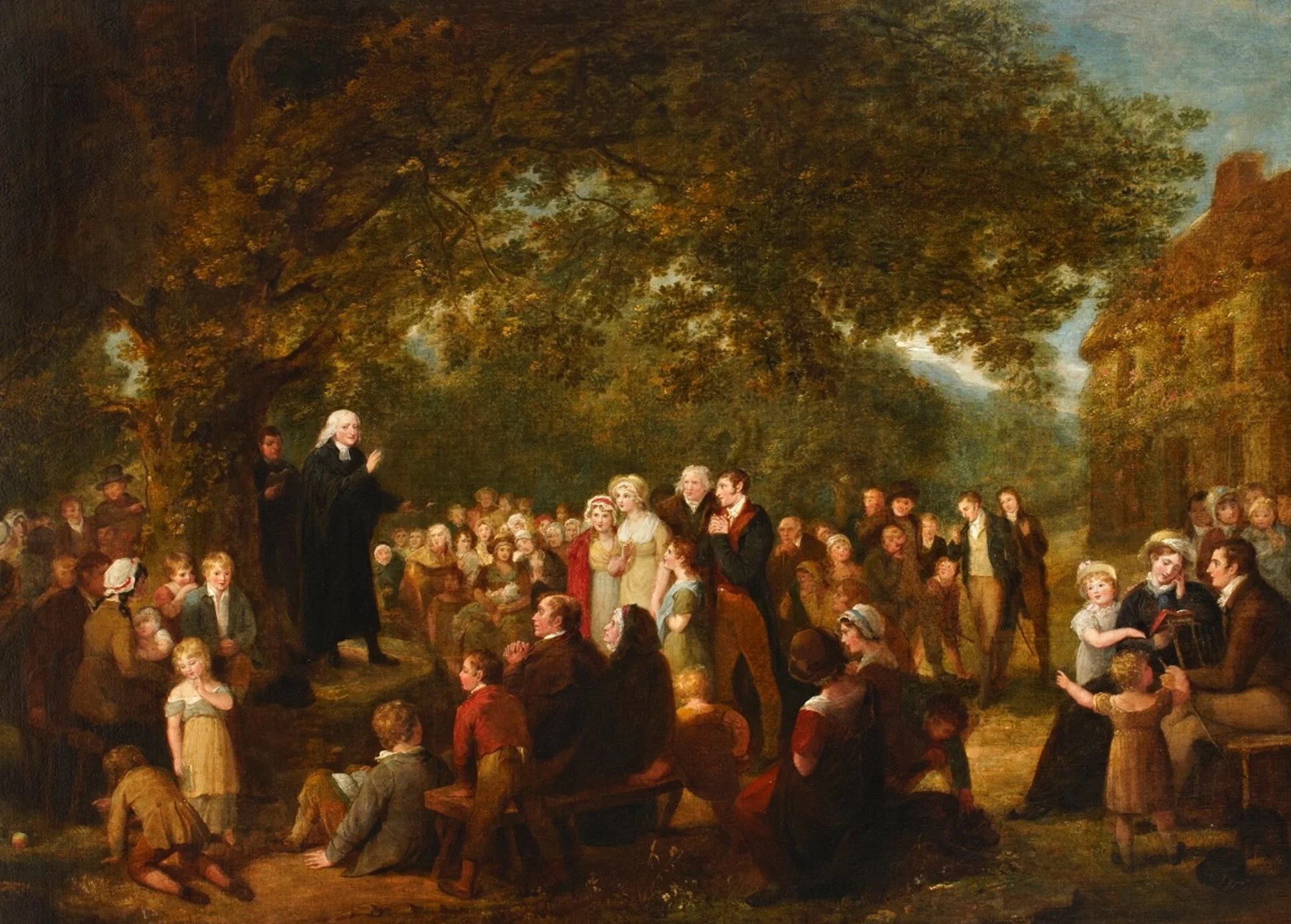
Having attended a Methodist seminary, I confess that I have a soft spot in my heart for John Wesley. In a time when the predominant strain of Anglicanism was heady and philosophical, Wesley called the church to be attentive to the real, powerful work of the Holy Spirit today, not just in history. He shared the love of Christ in the highways and byways of his time and place - in fields and in mining towns as well as in city churches. Today, Wesley still reminds Anglicans, and indeed all Christians, that the Holy Spirit is alive and active, changing hearts and transforming minds.
Edgardo Colon-Emeric, Duke’s current Dean of the Divinity School, writes,
When John Wesley first stepped out of the walls of the church in order to reach people working in fields, mines and markets, he preached from the passage from Jesus’ inaugural sermon: “The Spirit of the Lord is upon me, because he has anointed me to bring good news to the poor” (Luke 4:18). This textual choice was not free from controversy. The 18th century dismissed those who talked about the ongoing work of the Spirit as ignorant and irresponsible.
Against the theological currents of his day, John Wesley refused to limit the Spirit’s presence and power to the age of the apostles or the institutions of the church. The rise of Methodism was for him proof that the power of Pentecost was still at work in the world. The Spirit was still active in history, particularly among the marginalized.
According to Scripture, the love of God is poured into our hearts through the Holy Spirit (cf. Romans 5:5). For Wesley, the social dimension of this love is made visible through works of mercy. Pentecost’s power is at work when we feed the hungry, visit the sick and welcome the stranger. It is also at work when we call sinners to repentance and encourage Christians in the way to holiness.
As we walk the road to Pentecost in the coming week, I invite you to pray with me that perilously life-giving prayer: Come, Holy Spirit. I pray that the Holy Spirit will continue to enliven and empower our parish for ministry, and set us on fire with love for the God who has given us this Good News to proclaim.
Yours in Christ,
Kara+
